Powered by LawFuel – Wells Fargo Agrees to Pay $3 Billion to Resolve Criminal and Civil Investigations into Sales Practices Involving the Opening ofMillions of Accounts Without Customer Authorization
$3 Billion Payment Result of Deferred Prosecution Agreement in Criminal Matter, Settlement of Civil Claims under FIRREA, and Resolution of SEC Proceedings
LOS ANGELES – Wells Fargo & Co. and its subsidiary, Wells Fargo Bank, N.A., have agreed to pay $3 billion to resolve three separate matters stemming from a years-long practice of pressuring employees to meet unrealistic sales goals – which led thousands of employees to provide millions of accounts or products to customers under false pretenses or without consent, often by creating false records or misusing customers’ identities, the Department of Justice announced today.
As part of the agreements with the United States Attorney’s Offices for the Central District of California and the Western District of North Carolina, the Justice Department’s Civil Division, and the Securities and Exchange Commission, Wells Fargo admitted that it collected millions of dollars in fees and interest to which the company was not entitled, harmed the credit ratings of certain customers, and unlawfully misused customers’ sensitive personal information.
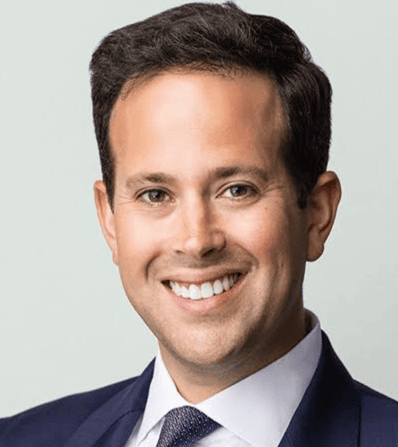
“This case illustrates a complete failure of leadership at multiple levels within the bank. Simply put, Wells Fargo traded its hard-earned reputation for short-term profits, and harmed untold numbers of customers along the way,” said United States Attorney Nick Hanna. “We are hopeful that this $3 billion penalty, along with the personnel and structural changes at the bank, will ensure that such conduct will not reoccur.”
The criminal investigation into false bank records and identity theft is being resolved with a deferred prosecution agreement in which Wells Fargo will not be prosecuted during the three-year term of the agreement if it abides by certain conditions, including continuing to cooperate with ongoing investigations. Wells Fargo also entered a civil settlement agreement under the Financial Institutions Reform, Recovery and Enforcement Act of 1989 (FIRREA) based on Wells Fargo’s creation of false bank records. Wells Fargo also agreed to the SEC instituting a cease-and-desist proceeding finding violations of Section 10(b) of the Exchange Act and Rule 10b-5 thereunder. The $3 billion payment resolves all three matters, and includes a $500 million civil penalty to be distributed by the SEC to investors.
“When companies cheat to compete, they harm customers and other competitors,” said Deputy Assistant Attorney General Michael D. Granston of the Department of Justice’s Civil Division. “This settlement holds Wells Fargo accountable for tolerating fraudulent conduct that is remarkable both for its duration and scope, and for its blatant disregard of customers’ private information. The Civil Division will continue to use all available tools to protect the American public from fraud and abuse, including misconduct by or against their financial institutions.”
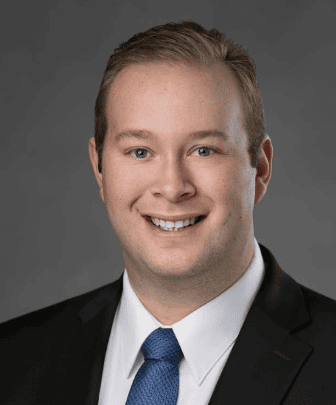
“Our settlement with Wells Fargo, and the $3 billion monetary penalty imposed on the bank, go far beyond ‘the cost of doing business.’ They are appropriate given the staggering size, scope and duration of Wells Fargo’s illicit conduct, which spanned well over a decade,” said Andrew Murray, the United States Attorney for the Western District of North Carolina. “When a reputable institution like Wells Fargo caves to the pernicious forces of greed, and puts its own interests ahead of those of the customers it claims to serve, my office will not sit idle. Today’s announcement should serve as a stark reminder that no institution is too big, too powerful, or too well known to be held accountable and face enforcement action for its wrongdoings.”
The 16-page statement of facts accompanying the deferred prosecution agreement and civil settlement agreement outlines a course of conduct over 15 years at Well Fargo’s Community Bank, which was then the largest operating segment of Wells Fargo, consistently generating more than half of the company’s revenue. The statement of facts outlines top Community Bank leaders’ knowledge of the conduct. As part of the statement of facts, Wells Fargo admitted the following:
Beginning in 1998, Wells Fargo increased its focus on sales volume and reliance on annual sales growth. A core part of this sales model was the “cross-sell strategy” to sell existing customers additional financial products. It was “the foundation of our business model,” according to Wells Fargo. In its 2012 Vision and Values statement, Wells Fargo stated: “We start with what the customer needs – not with what we want to sell them.”
But, in contrast to Wells Fargo’s public statements and disclosures about needs-based selling, the Community Bank implemented a volume-based sales model in which employees were directed and pressured to sell large volumes of products to existing customers, often with little regard to actual customer need or expected use. The Community Bank’s onerous sales goals and accompanying management pressure led thousands of its employees to engage in unlawful conduct – including fraud, identity theft and the falsification of bank records – and unethical practices to sell products of no or little value to the customer.
Many of these practices were referred to within Wells Fargo as “gaming.” Gaming strategies varied widely, but included using existing customers’ identities – without their consent – to open checking and savings, debit card, credit card, bill pay and global remittance accounts. From 2002 to 2016, gaming practices included forging customer signatures to open accounts without authorization, creating PINs to activate unauthorized debit cards, moving money from millions of customer accounts to unauthorized accounts in a practice known internally as “simulated funding,” opening credit cards and bill pay products without authorization, altering customers’ true contact information to prevent customers from learning of unauthorized accounts and prevent Wells Fargo employees from reaching customers to conduct customer satisfaction surveys, and encouraging customers to open accounts they neither wanted or needed.
The top managers of the Community Bank were aware of the unlawful and unethical gaming practices as early as 2002, and they knew that the conduct was increasing due to onerous sales goals and pressure from management to meet these goals. One internal investigator in 2004 called the problem a “growing plague.” The following year, another internal investigator said the problem was “spiraling out of control.” Even after senior managers in the Community Bank directly called into question the implementation of the cross-sell strategy, Community Bank senior leadership refused to alter the sales model, which contained unrealistic sales goals and a focus on low-quality secondary accounts.
Despite knowledge of the illegal sales practices, Community Bank senior leadership failed to take sufficient action to prevent and reduce the incidence of such practices. Senior leadership of the Community Bank minimized the problems to Wells Fargo management and its board of directors, by casting the problem as driven by individual misconduct instead of the sales model itself. Community Bank senior leadership viewed negative sales quality and integrity as a necessary byproduct of the increased sales and as merely the cost of doing business.
“Our office is committed to bringing to justice those who deliberately falsify and fabricate bank records in order to deceive regulators and the public,” said Inspector General Mark Bialek of the Board of Governors of the Federal Reserve System and Bureau of Consumer Financial Protection. “I commend our agent and our law enforcement partners for their hard work and persistence that led to today’s announcement.”
“Today’s multi-billion-dollar penalty holds Wells Fargo accountable for its unlawful sales practices and pressure tactics in which it deceived millions of clients, thus causing substantial hardship for the very individuals who placed their trust in the institution,” said Inspector General Jay N. Lerner of the Federal Deposit Insurance Corporation. “The FDIC Office of Inspector General is committed to working with our law enforcement partners in order to investigate such financial crimes that harm customers and investors, and undermine the integrity of the banking sector.”
“The United States Postal Inspection Service has a long history of successfully investigating complex fraud cases,” stated San Francisco Division Inspector in Charge Rafael E. Nuñez. “Anyone or any organization engaging in deceptive practices should know they will not go undetected and will be held accountable. The collaborative investigative work on this case conducted by Postal Inspectors, our law enforcement partners, and the United States Attorney’s Offices illustrates our efforts to protect consumers.”
The government’s decision to enter into the deferred prosecution agreement and civil settlement took into account a number of factors, including Wells Fargo’s extensive cooperation and substantial assistance with the government’s investigations; Wells Fargo’s admission of wrongdoing; its continued cooperation with investigators; its prior settlements in a series of regulatory and civil actions; and remedial actions, including significant changes in Wells Fargo’s management and its board of directors, an enhanced compliance program, and significant work to identify and compensate customers who may have been victims. The deferred prosecution agreement will be in effect for three years.
The global settlement also reflects coordination between the Department of Justice and the SEC to ensure a resolution that appropriately addresses the severity of the defendants’ conduct while avoiding the imposition of fines and penalties that are unnecessarily duplicative.
The deferred prosecution agreement was handled by the United States Attorney’s Offices in Los Angeles and Charlotte, with investigative support from the Federal Bureau of Investigation, the Federal Deposit Insurance Corporation – Office of Inspector General, the Federal Housing Finance Agency – Office of Inspector General, the Office of Inspector General for the Board of Governors of the Federal Reserve System and Consumer Financial Protection Bureau, and the United States Postal Inspection Service.
The civil settlement agreement was the result of a coordinated effort between the U.S. Attorney’s Offices in Los Angeles and Charlotte, and the Commercial Litigation Branch in the Civil Division of the Department of Justice.
Release No. 20-035
Recent Headlines
- What is still missing to close the gap between law firms and legal departments?
- Texas Trial Lawyer Tony Buzbee Buys $15.5 Million Mansion Next Door. Then Calls In The Wrecking Ball
- Thomson Reuters Builds Its Own AI Brain – Here’s Why Thomson May Matter More Than Another Legal Chatbot
- Google Goes for Big Law’s Jugular: Inside Gemini Enterprise for Legal
- From Phone-Hacking Hero to Courtroom Zero – ‘Golden Boy’ Lawyer’s Reputation Tattered By Prince Harry Defeat