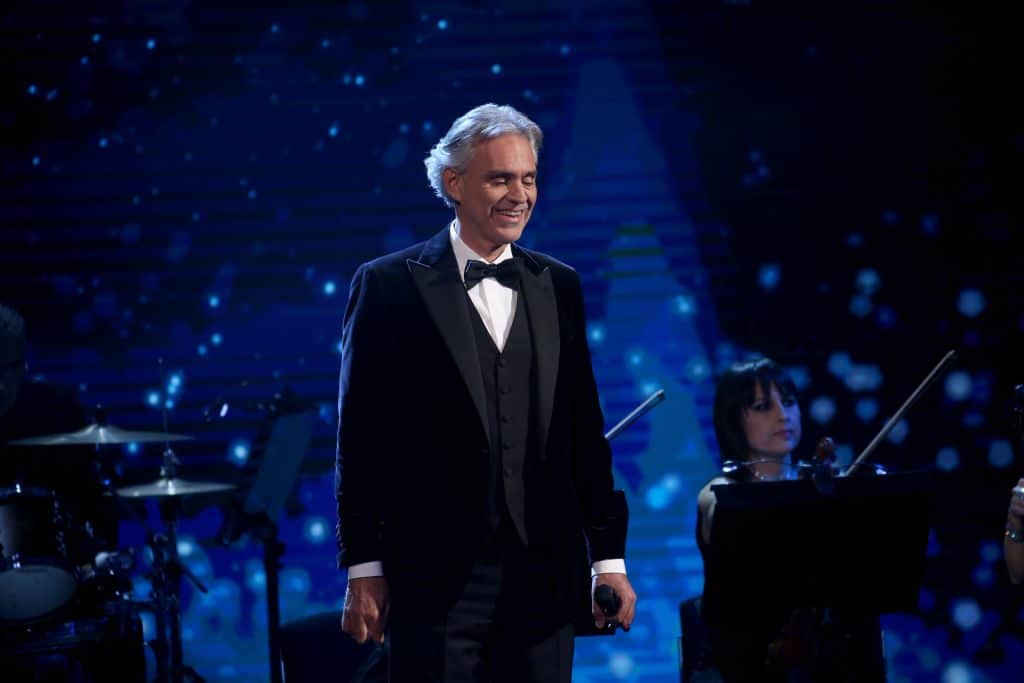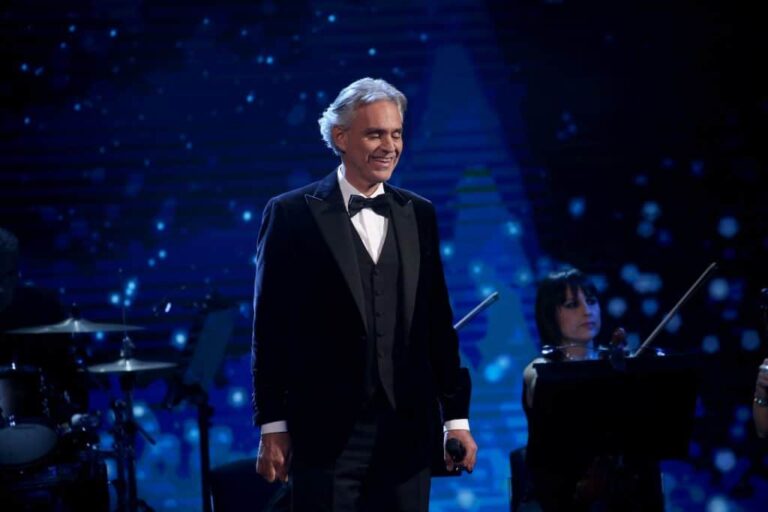
The famous Italian opera singer is said to have one of the most stunning voices in the world. After high school, Andrea Bocelli pursued a degree in law and sang in local bars and clubs on the side to make money. Bocelli graduated from law school but his passion was still singing. After working as a lawyer for just over a year, Bocelli decided to pursue music full time.
Since 1982, Bocelli has recorded 15 solo studio albums of both pop and classical music, three greatest hits albums, and nine complete operas, selling over 90 million records worldwide.
Singer Celine Dion has said that “if God would have a singing voice, he must sound a lot like Andrea Bocelli”,and record producer David Foster has often described Bocelli’s voice as the most beautiful in the world.
Kirkland & Ellis just changed the frame for the entire industry If you write about lawyers for long enough, you make a quiet peace with the gap between your pay packet and theirs. This week, however, Kirkland & Ellis has made that gap feel almost cosmic. Equity partners at the world’s highest-grossing law firm averaged $11.1 million each for 2025 – a 20% increase on 2024. The major money figure places Kirkland’s partners in the earnings bracket of a top Premier League footballer, at roughly £22,500 a day. The firm simultaneously became the first law firm in history to break $10 billion in revenue, posting $10.56 billion for the year.
When Weil, Gotshal & Manges announced last week that Ramona Y. Nee will succeed Barry Wolf as Executive Partner from January 2027, the news landed with the quiet inevitability of a deal that everyone saw coming. Wolf, who has steered the firm for 16 years, called her “uniquely suited.” He was not exaggerating. For nearly a quarter-century Nee has been the quiet engine of Weil’s U.S. private equity practice and the beating heart of its Boston office. Now the firm is handing her the keys.
The legal profession has survived recessions, regulatory upheavals and the occasional partner meltdown. But the next threat to BigLaw’s favourite revenue model may come from something far less dramatic. A machine that reads faster than any associate and which could spell the end of the infamous ‘billable hour’, which has been touted as being in its end time for some time.
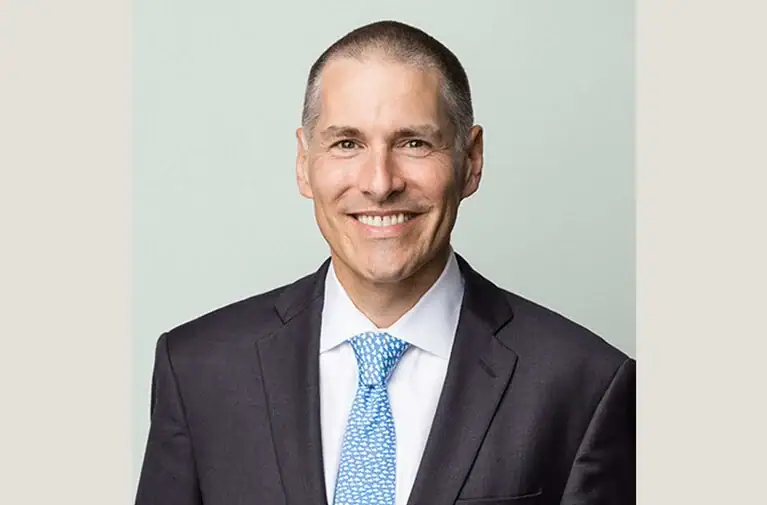
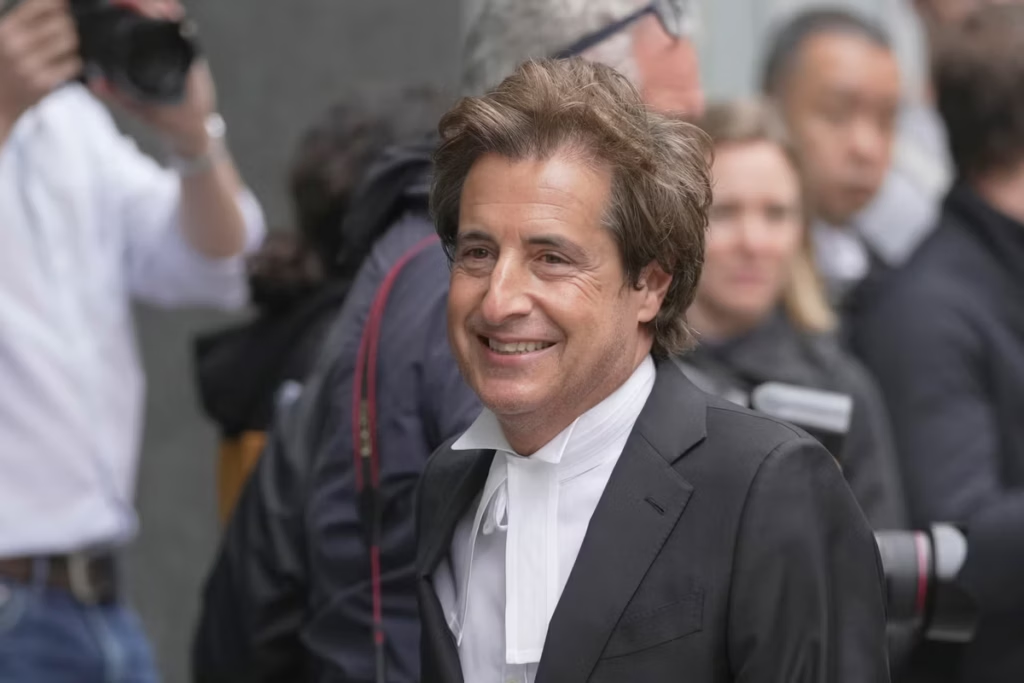
According to Jeff Bleich, general counsel at AI company Anthropic, (pictured) the traditional billable hour could soon be on borrowed time.
A two‑year‑old Swedish startup has just become one of the most valuable legal tech businesses on the planet—and it is using that war chest to plant its flag squarely in the US legal market. Legora’s $550 million Series D at a $5.55 billion valuation is not just another exuberant AI round; it is a blunt message to law firm leaders that the window for treating AI as a side project has closed. Legora’s pitch is disarmingly simple. Built on top of large language models, its platform targets the work that eats most of a junior lawyer’s life: research, document review, contract drafting and due diligence. The company claims tens of thousands of legal professionals using the product daily, across some 800 customers in more than 50 markets, including heavy‑hitting firms like Bird & Bird, Cleary Gottlieb, White & Case, Linklaters, Goodwin, Dentons and advisers such as Deloitte.
It has been a year — twelve months of watching the most powerful law firms on the planet twist in the wind at the pleasure of a sitting president. And just when it looked like the drama had finally resolved itself, Washington reminded everyone that in this administration, nothing is ever quite over. On Monday, the Trump administration quietly announced it was abandoning its executive orders against Jenner & Block, Perkins Coie, WilmerHale, and Susman Godfrey — four firms that had the nerve, and the litigation chops, to fight back. All four had beaten the orders in the lower courts.
For decades, BigLaw partnership compensation had the reassuring predictability of a Swiss watch. Progress through lockstep. Accumulate seniority. Collect your reward. Repeat. That model isn’t dead. But the announcement in February 2026 that Freshfields, the world’s 13th largest firm by gross revenue, and an institution that maintained an all-equity partnership for its entire existence, was introducing a nonequity partner tier while simultaneously stretching its lockstep to reward higher earners at the top of the pay scale, made something abundantly clear. The Pay Reset is Now Freshfields isn’t alone. Cravath created a salaried partner tier in November 2023, and that move gave other highly-ranked firms permission to follow suit — Paul Weiss, WilmerHale, Cleary, Skadden, Debevoise, and Sullivan & Cromwell have all introduced nonequity tiers in the two years since.
LawFuell's editors select and publish the most relevant and up-to-date information about lawyers and law firms for LawFuel on a daily basis from the most reputable and independent sources available.