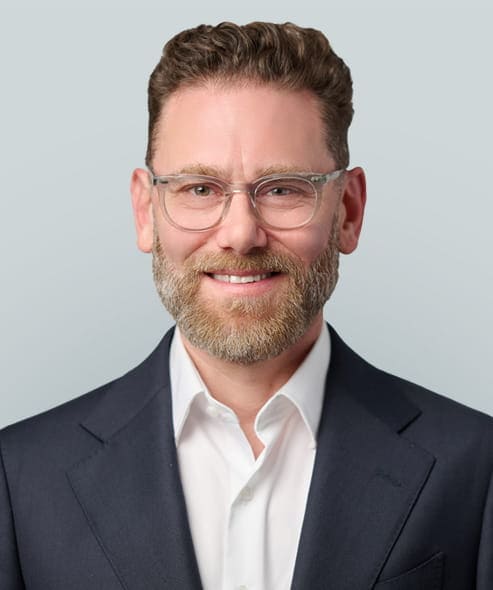
Christopher Mikson joins DLA Piper’s Litigation practice in Philadelphia and Washington, DC

Dlapiper

Powered by LawFuel January 23, 2020 – DLA Piper announced today that Christopher Mikson has joined the firm’s Litigation practice as a partner in Philadelphia and Washington, DC. 

Mikson, who is also a medical doctor and registered patent attorney, is an accomplished litigator who focuses on Food and Drug Administration regulatory matters; complex intellectual property, commercial and product liability litigation; and transactional due diligence and counseling in the healthcare and life sciences industries. 

“Chris’s unique training as a physician and lawyer makes him an invaluable addition to our growing life sciences practice,” said Loren Brown, global and US co-chair of DLA Piper’s Litigation practice. “He will greatly enhance both our regulatory and litigation capabilities in this key sector, and we are confident that our clients will value his advice and counsel immediately.” 

“Chris is a great fit for our platform, and he brings a skillset that adds depth to our capabilities in a number of areas, including FDA regulatory, product liability and intellectual property matters,” said Jeff Lehrer, managing partner of the firm’s Washington, DC, office. “We are thrilled to welcome him on board.”

Mikson, who joins from Mayer Brown, received his J.D. from Rutgers Law School and his B.A. from Rutgers College. He completed the Post-Baccalaureate Premedical Program at the University of Pennsylvania and received his M.D. from Jefferson Medical College.

Recent Posts on LawFuel

  • The Private Equity Lawyer Who Will Run Weil Gotshal
    When Weil, Gotshal & Manges announced last week that Ramona Y. Nee will succeed Barry Wolf as Executive Partner from January 2027, the news landed with the quiet inevitability of a deal that everyone saw coming. Wolf, who has steered the firm for 16 years, called her “uniquely suited.” He was not exaggerating. For nearly a quarter-century Nee has been the quiet engine of Weil’s U.S. private equity practice and the beating heart of its Boston office. Now the firm is handing her the keys.
  • Is This The Billable Hour’s Last Stand? Anthropic’s Top Lawyer Thinks So
    The legal profession has survived recessions, regulatory upheavals and the occasional partner meltdown. But the next threat to BigLaw’s favourite revenue model may come from something far less dramatic. A machine that reads faster than any associate and which could spell the end of the infamous ‘billable hour’, which has been touted as being in its end time for some time. According to Jeff Bleich, general counsel at AI company Anthropic, (pictured) the traditional billable hour could soon be on borrowed time.
  • DLA Piper Makes A Big Bet By Ditching the Verein for a New Global Structure
    Updated 16 March with clarification on the DLAPiper profit pool arrangements following the restructuring.For years,… Read more: DLA Piper Makes A Big Bet By Ditching the Verein for a New Global Structure
  • Billable Hours vs. Billion‑Dollar Bots – Legora and the New Economics of Law
    A two‑year‑old Swedish startup has just become one of the most valuable legal tech businesses on the planet—and it is using that war chest to plant its flag squarely in the US legal market. Legora’s $550 million Series D at a $5.55 billion valuation is not just another exuberant AI round; it is a blunt message to law firm leaders that the window for treating AI as a side project has closed. Legora’s pitch is disarmingly simple. Built on top of large language models, its platform targets the work that eats most of a junior lawyer’s life: research, document review, contract drafting and due diligence. The company claims tens of thousands of legal professionals using the product daily, across some 800 customers in more than 50 markets, including heavy‑hitting firms like Bird & Bird, Cleary Gottlieb, White & Case, Linklaters, Goodwin, Dentons and advisers such as Deloitte.
  • Big Law’s Trump Reprieve Lasts Less Than 24 Hours — The U-Turn That Changed Everything
    It has been a year — twelve months of watching the most powerful law firms on the planet twist in the wind at the pleasure of a sitting president. And just when it looked like the drama had finally resolved itself, Washington reminded everyone that in this administration, nothing is ever quite over. On Monday, the Trump administration quietly announced it was abandoning its executive orders against Jenner & Block, Perkins Coie, WilmerHale, and Susman Godfrey — four firms that had the nerve, and the litigation chops, to fight back. All four had beaten the orders in the lower courts.
  • Is This The Death of Lockstep Pay for BigLaw?
    For decades, BigLaw partnership compensation had the reassuring predictability of a Swiss watch. Progress through lockstep. Accumulate seniority. Collect your reward. Repeat. That model isn’t dead. But the announcement in February 2026 that Freshfields, the world’s 13th largest firm by gross revenue, and an institution that maintained an all-equity partnership for its entire existence, was introducing a nonequity partner tier while simultaneously stretching its lockstep to reward higher earners at the top of the pay scale, made something abundantly clear. The Pay Reset is Now Freshfields isn’t alone. Cravath created a salaried partner tier in November 2023, and that move gave other highly-ranked firms permission to follow suit — Paul Weiss, WilmerHale, Cleary, Skadden, Debevoise, and Sullivan & Cromwell have all introduced nonequity tiers in the two years since.
  • Macfarlanes’ Curious New York Move: A Manhattan Office With No U.S. Law
    Macfarlanes Opens Manhattan Office – With a Deliberately Limited MissionMacfarlanes is joining the steady procession… Read more: Macfarlanes’ Curious New York Move: A Manhattan Office With No U.S. Law
  • Personal Injury Law Powerhouses – The Overlooked Business Geniuses Crushing Big Law
    Snobbery alert: while Big Law partners chase prestige, lockstep compensation, and sky-high billable-hour targets, those flashy “billboard lawyers” at personal injury firms like Morgan & Morgan are quietly running the smartest, most scalable legal businesses in America. And the data proves it. Morgan & Morgan isn’t just big (as LawFuel has previously reported) it’s the largest personal injury firm in the country, with over 1,000 attorneys (ranking 42nd overall on the 2025 NLJ 500 and 34th on the Law360 400), offices in every state, and more than $30 billion recovered for 700,000+ clients.
  • Law Firm Marketing in 2026: What Stopped Working and What Replaced It
    Let’s be honest with each other for a moment. You didn’t go to law school to become a content creator. You went because you’re sharp, you like solving problems, and — let’s be real — the billing rates don’t exactly hurt. But here you are in 2026, staring down a marketing landscape that looks absolutely nothing like it did three years ago, while some LinkedIn bro in a blazer-and-jeans combo tells you to “post consistently or die.” You’re not dying because you’re bad at marketing. You’re struggling because the rulebook got shredded and nobody sent you the memo. Here’s what’s actually happening: clients are asking ChatGPT “what happens to the house if we divorce?” before they ever type your name into Google. Your lovingly crafted blog post — the one your firm spent four hours approving — is sitting underneath an AI summary that answers the question completely and sends precisely zero traffic your way. And the referral you were counting on last month? That client quietly asked an AI about you first. It didn’t go well. The numbers bear this out, and they’re not comfortable reading. AI Overviews are slashing organic click-through rates by somewhere between 58 and 61 percent the moment they appear on a results page (Seer Interactive, September 2025; Ahrefs, December 2025).

Scroll to Top

Log in to read this post

We'll email you a magic code to log you in without a password.